Restoring an 1878 Golding Jobber No. 7 (10 x 15) — clone
It’s pretty clear from my website that I am a Golding enthusiast. You will find a lot of information I have gathered on the brand. I have restored over 100 presses in the last decade and the vast majority were Golding models. I have done a lot of research on Golding as a result. I also have found some pretty rare models often without realizing it at first. It’s great fun. I am thankful to have found this hobby after retiring from the sales world. It fits me very well and given me countless hours of pleasure. That said, I thought I knew most models as a result of my research efforts and hours of restoration. Then I saw this press on Ebay in March of 2021. 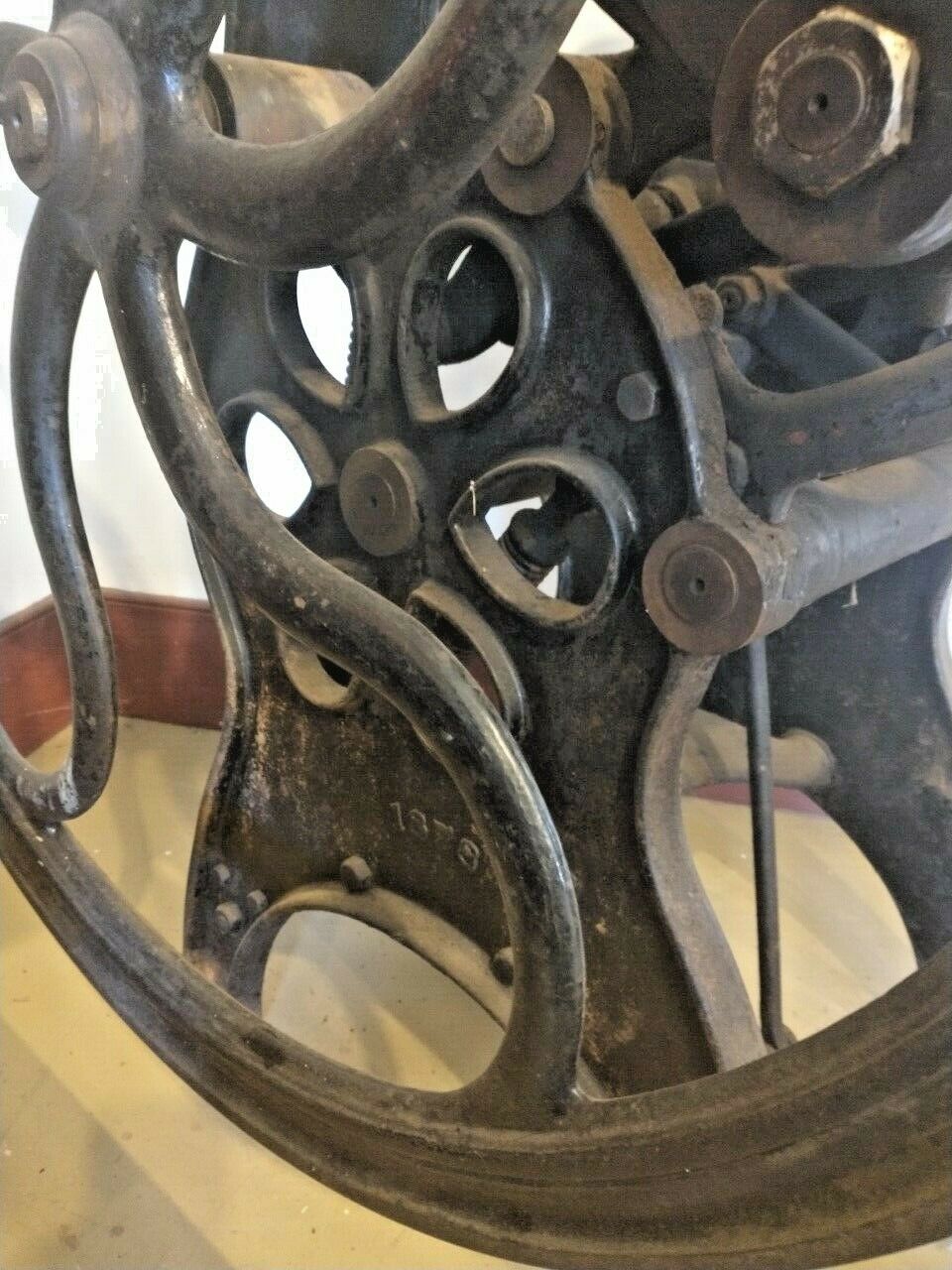 It was labeled as a Golding Jobber and my first thought was no way. This is not a Golding. I know that model very well. It must be mislabeled. But no, it was in fact a Golding Jobber of a design I have never seen. Asking the letterpress community resulted in a similar reaction. No one had ever seen one that looked like this. So………I bid on it. I was the successful bidder, and my wife and I headed out to Lewisburg, PA to retrieve it. The drive was over eight hours total but the press was now in my garage safe and sound. Seen below is a copy of the original bill of sale for the press. It was sold on March 12, 1879 to a gentleman in Taunton, Ma. for the sum of $211, with the novelty of returning $11, making it an even $200. I purchased it on March 13, 2021 for $1250.00. A dollar in 1879 is now worth approximately $27.65 taking inflation into account. That means the press would cost about $5500 new in today’s dollars. Not an inexpensive purchase back then.
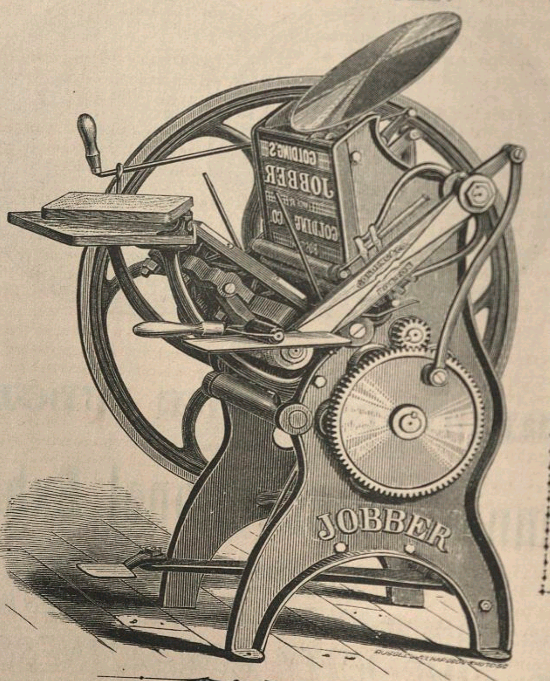
Image from 1877 catalog
Here is a picture from a Golding catalog from 1877. It shows the exact press. I requested the information from Harvard University that houses the Golding business records and has catalogs for most years. It took 6 months to get it, but, it was worth it.
The press is constructed much like the Old style Pearl in that the frame is bolted together. The treadle can be moved left or right to make it easier to treadle with either foot. It has a throw off 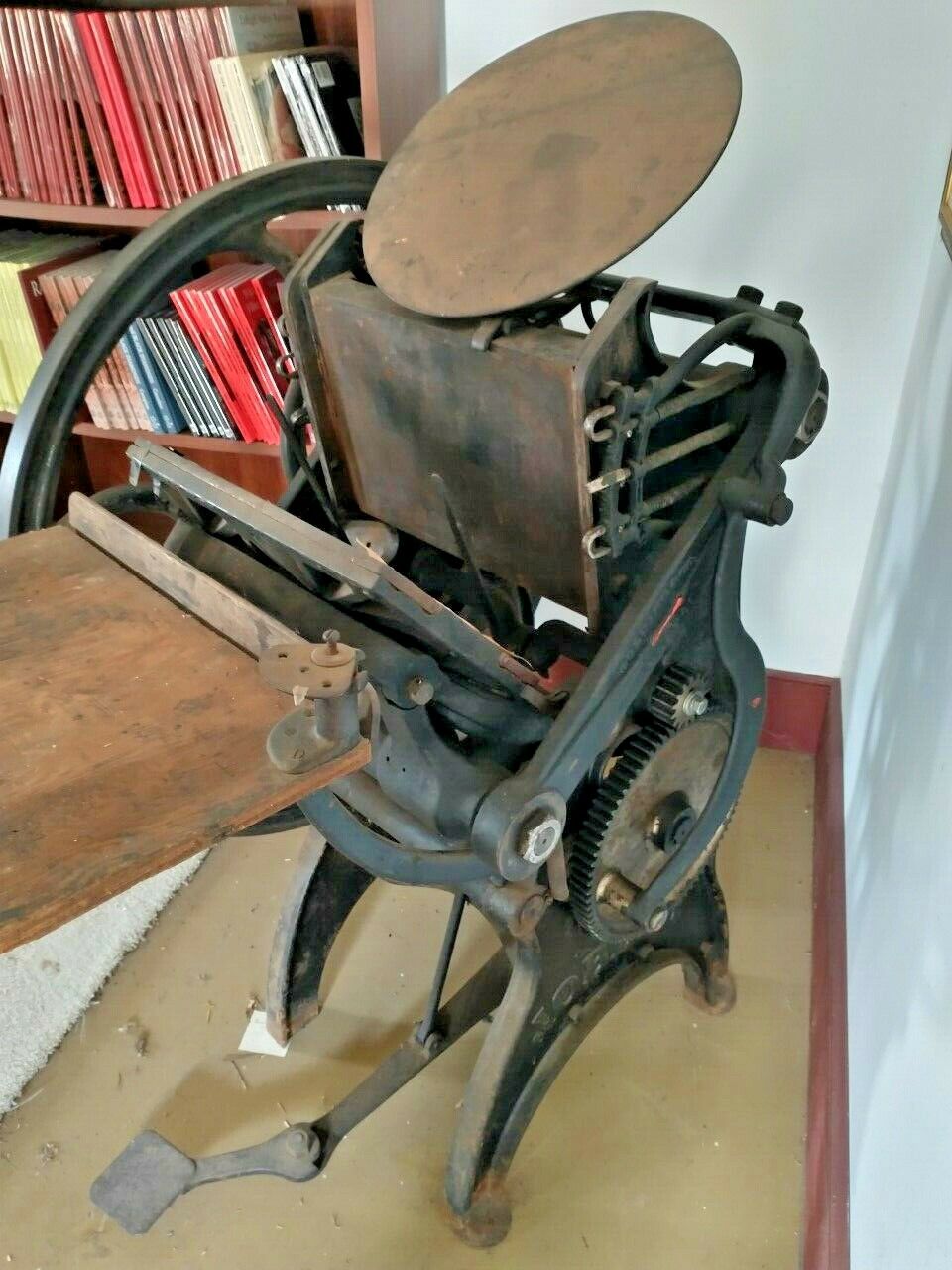 unlike the Pearl which is the wood handle and the steel rod on the upper left side of the press next to the flywheel. This mechanism was entirely missing, and without this picture I would never have known what it was supposed to look like. There are many broken parts that need difficult repairs as well. I will take them one at a time and hopefully resolve each one. And so it starts!
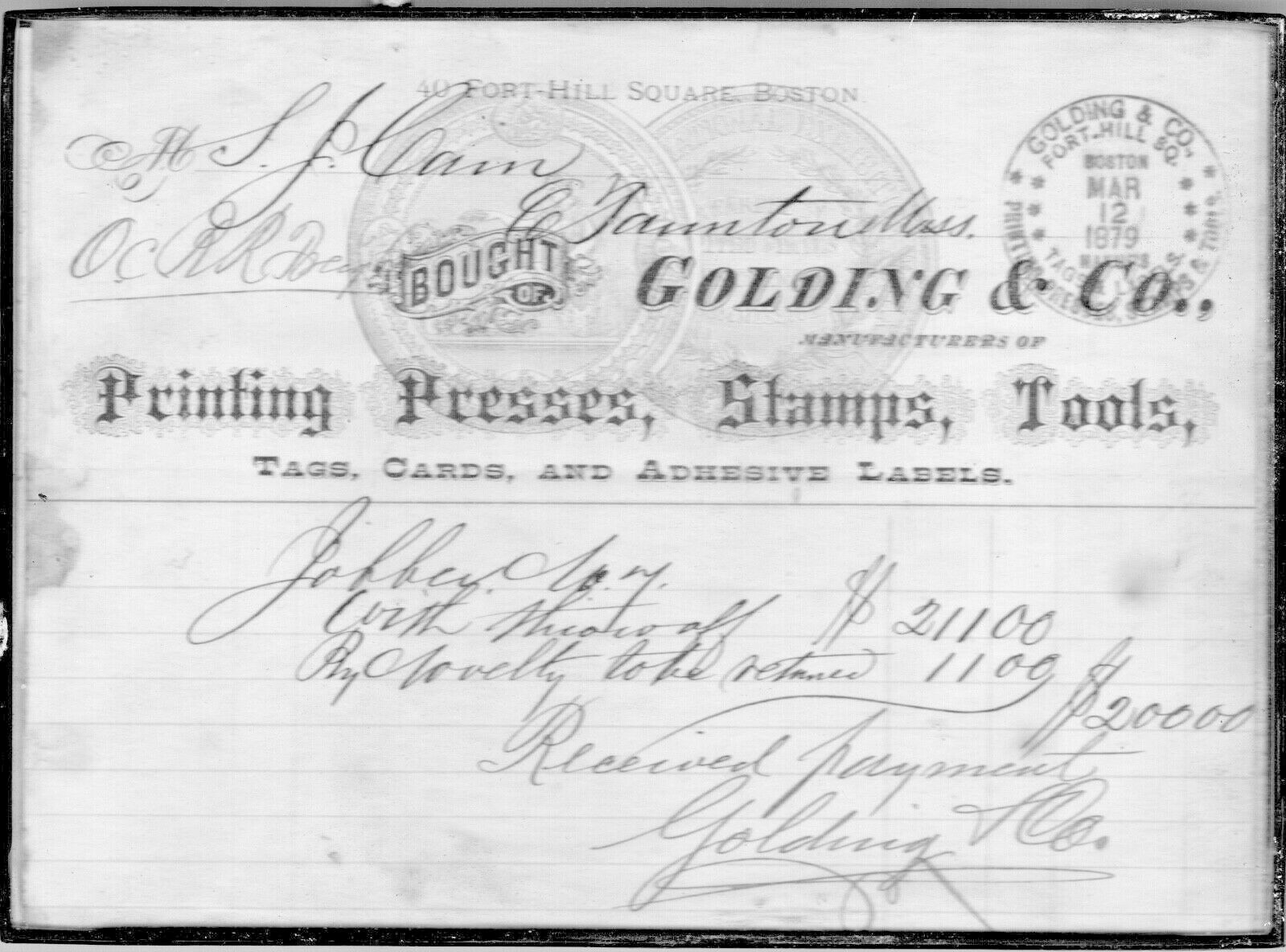
Original bill of sale
Here are some pictures of the press in the “before stage”. It is in pretty typical condition for a press 143 years old. Things happened and parts get broken, get repairs, and parts get removed and lost, etc. It is just part of the restoration process. In this case there are no donor presses or replacement parts available, so if it is broken it needs to be repaired. If it is missing it needs to be recreated. And if it was already repaired, but, poorly, it needs to be corrected. This design Jobber was not seen before this one surfaced. The design was changed very quickly to the more familiar solid body press that everyone thinks of when talking about a Golding Jobber.
Picture 1 shows the throw off mechanism(upper left) that I need to figure out. It also shows the gripper finger rod mounting tabs on the platen are completely broken off making the grippers non functioning and will need repair.
Picture 2 shows the date of manufacture. A feature found on many early Golding presses.
Picture 3 shows the open platen with traditional adjustment using four bolts in each corner and one center bolt to actually attach the platen to the rocker. This example is before springs were used on the center bolt. It has a piece of leather instead.
Picture 4 shows the adjustable treadle. It can be rotated left or right to allow the use of either foot without moving your position from the centerline of the press. I have never seen another press with this feature. It also shows the treadle connection rod is bent and will need straightening.
Picture 5 shows a repair coupling for the flywheel. Some major accident occurred in the past that broke off the flywheel driveshaft on both sides of the press. The flywheel side received the coupling seen, and the pinion gear side was drilled and tapped to hold the gear on. Both of these repairs will be upgraded for strength and aesthetics.
Picture 6 shows the left side of the press.
Picture 7 shows a closeup of the unusual throw off mechanism(what is left of it)
Picture 8 shows the right side of the press and the broken off pinion gear can be seen above the bull gear.